
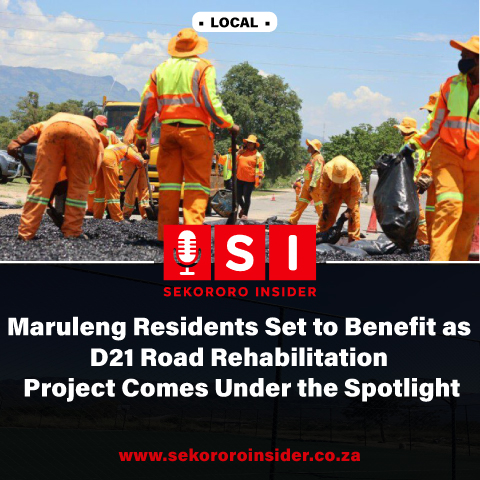
For many residents of Maruleng Municipality, the condition of local roads is not just an infrastructure issue—it is something they experience every day. From schoolchildren travelling to class and workers commuting to their jobs, to farmers transporting produce and small businesses serving customers, the quality of road networks has a direct impact on daily life.
It is against this backdrop that Limpopo MEC for Public Works, Roads and Infrastructure, Tonny Ernest Rachoene, will lead a project monitoring programme focused on the rehabilitation of the D21 Road on Monday, 22 June 2026.
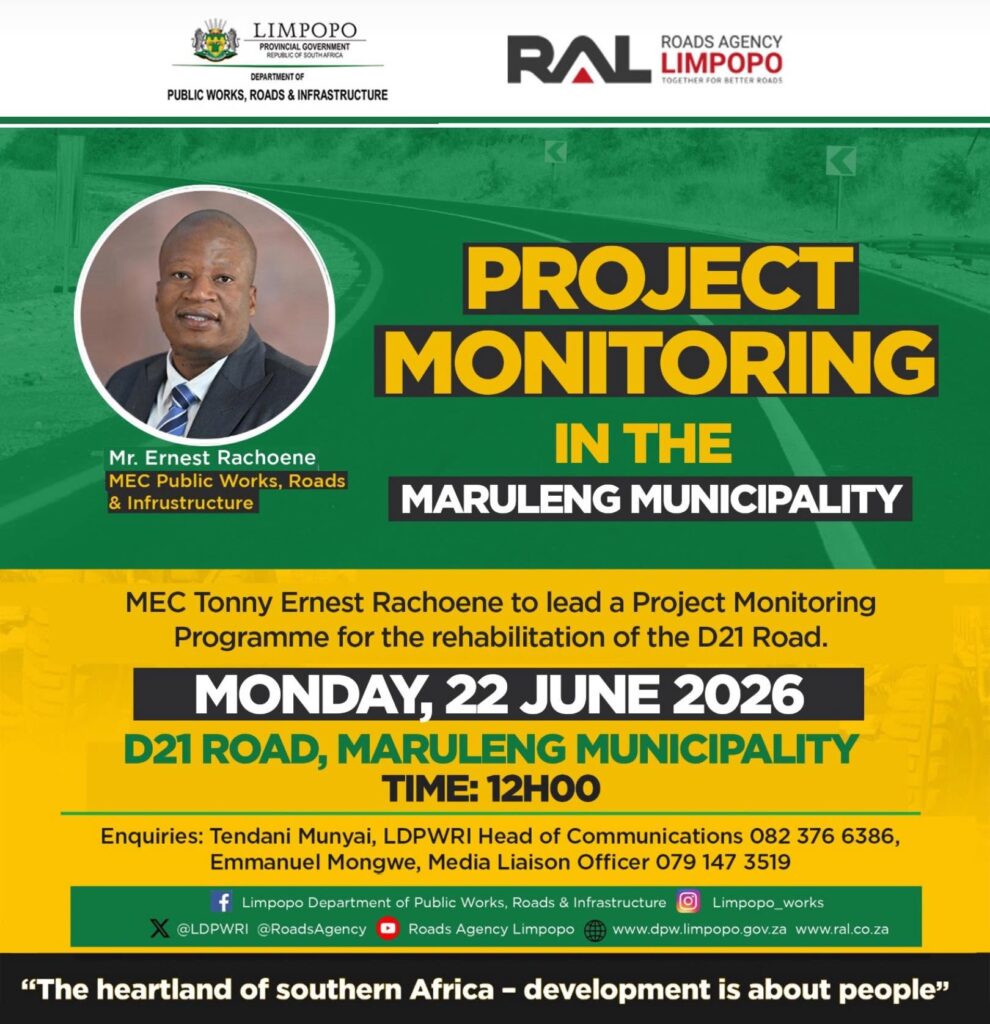
The visit forms part of ongoing efforts by the Limpopo Department of Public Works, Roads and Infrastructure and Roads Agency Limpopo to ensure that critical infrastructure projects remain on track and deliver meaningful benefits to local communities.
Road rehabilitation projects rarely attract widespread attention, yet they often have some of the most visible and lasting effects on people’s lives. A well-maintained road can improve access to schools, healthcare facilities, places of work and business opportunities. It can also reduce travel times, improve road safety and lower vehicle maintenance costs for motorists who use the route regularly.
The D21 Road is one of the key transport links serving communities within Maruleng Municipality. Over time, wear and tear caused by traffic volumes and weather conditions have affected sections of the road, highlighting the need for rehabilitation work. The current project seeks to address these challenges while ensuring that the route remains fit for purpose for years to come.
For community members, government oversight of such projects is often just as important as the construction work itself. Monitoring visits provide an opportunity for leaders to assess progress firsthand, engage with technical teams on site and identify any obstacles that could affect project delivery. They also offer residents reassurance that public infrastructure investments are receiving the necessary attention and oversight.
Speaking broadly about the importance of infrastructure development, government officials have consistently emphasised that roads serve as catalysts for economic growth. Improved transport networks make it easier for goods and services to move efficiently, connecting communities to markets and creating an environment that encourages investment.
In a municipality such as Maruleng, where tourism, agriculture and small business activities contribute significantly to the local economy, reliable road infrastructure is particularly important. Better roads not only improve mobility for residents but can also enhance the visitor experience, supporting economic activity across various sectors.
The rehabilitation project is also expected to create opportunities beyond the road itself. Infrastructure programmes often generate temporary employment during construction phases while contributing to skills development among local workers. These benefits, although sometimes overlooked, form an important part of the broader impact of public infrastructure investment.
As MEC Rachoene undertakes the monitoring visit, attention will be focused not only on the physical progress achieved on the D21 Road but also on the long-term value the project is expected to bring to surrounding communities. The visit reflects a commitment to accountability, service delivery and ensuring that development initiatives translate into tangible improvements for residents.
For many people who rely on the D21 Road every day, the rehabilitation project represents more than construction work. It represents safer journeys, improved accessibility and renewed confidence that infrastructure investment can make a meaningful difference in their lives.
As work continues, residents will be hoping that the upgraded route becomes a lasting example of how strategic infrastructure development can support community growth, strengthen local economies and improve quality of life across Maruleng Municipality.